

Designing an engaging and safe kids indoor play area isn’t just about colorful walls and soft toys—it’s about building an environment that fuels imagination, boosts physical activity, and ensures safety.
Whether you’re planning a small corner in your home or a full-scale commercial play zone, the right design can turn an average space into a magical world for children.
Why a Thoughtful Kids Indoor Play Area Design Matters?
Children are naturally active and imaginative. A thoughtfully crafted kids indoor play area design gives them a place to channel their energy, improve motor skills, and develop social interactions without the constraints of weather or outdoor hazards.
- Bonus: Indoor play spaces are perfect year-round solutions, especially in cities where outdoor space is limited.
From parents working at home to commercial facilities like cafes, clinics, or community centers, designing with purpose leads to both happier kids and more relaxed adults.
Elements of an Ideal Indoor Play Space
Creating an effective indoor play area is more than just placing toys in a room. Let’s break down the essential components:
1. Safety First
Before choosing colors or layouts, safety should be your top priority. Rounded furniture, padded flooring, non-toxic materials, and secure fixtures are foundational elements. Safety zones should be established, especially near climbing or bouncing equipment.
2. Zoning for Fun and Learning
Divide the space into zones that allow for different types of play:
- Physical play zone: Includes slides, climbing frames, tunnels, or a mini trampoline.
- Creative zone: Dedicated to drawing, crafting, or building blocks.
- Quiet zone: A calm corner with books, puzzles, or soft seating for kids to relax and recharge.
This strategic zoning helps maintain order while encouraging kids to explore various play styles.
3. Multi-Functional Furniture
To make the most limited indoor space, opt for multi-functional furniture like storage benches, foldable mats, or climbing walls that double as decor. This is especially valuable in homes or smaller commercial areas.
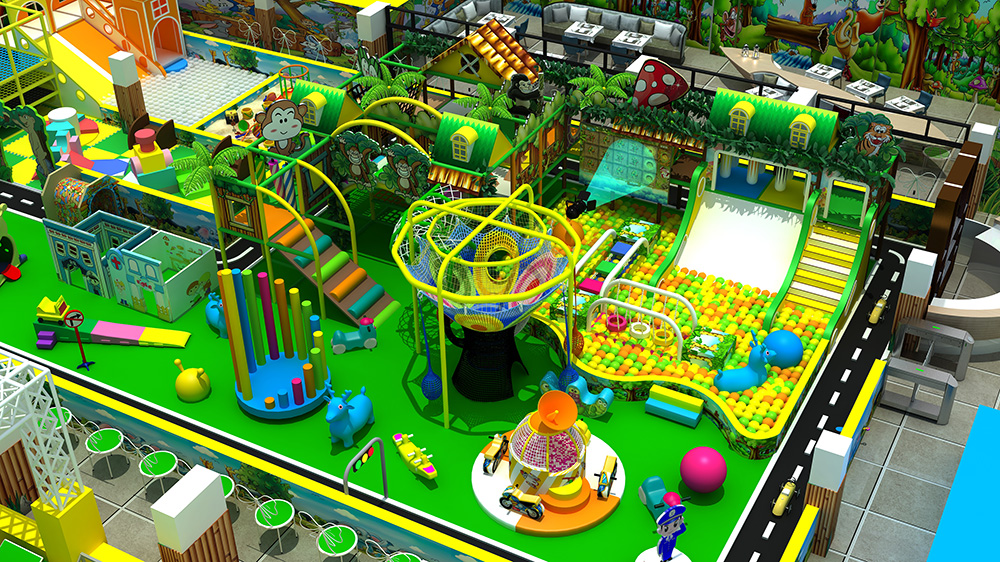
Designing for Age Versatility
One of the biggest challenges in kids indoor play area design is catering to multiple age groups. Toddlers have very different needs compared to 6-10-year-olds. A layered design approach solves this:
- Use color-coded flooring or wall panels to distinguish zones for different ages.
- Install modular play structures that can be adjusted or extended as children grow.
- Introduce interactive digital elements for older kids without making the area feel too tech heavy.
This ensures inclusivity while keeping older kids engaged and toddlers safe.
The Role of Color, Light, and Texture
Visual appeal is vital. Use cheerful but not overwhelming color palettes—pastels or nature-inspired tones tend to be soothing and energizing. Incorporate natural light as much as possible or use soft LED lighting to mimic daylight.
Textures play a sensory role too:
- Rubber flooring provides cushioning.
- Felt walls or corkboards add tactile interest.
- Transparent acrylic features give a modern and safe way to divide spaces.
The goal is to craft an area that stimulates without overstimulating.
Conclusion: Designing Memories That Last
An exceptional kid’s indoor play area design balances fun, safety, and creativity. Whether you’re building a cozy home nook or a dynamic commercial facility, keeping a child’s perspective in mind will lead to a space that they cherish and revisit with excitement. With a bit of planning and imagination, you can turn any indoor area into a haven of laughter, learning, and joyful play.